
A Turning Point in Payment Habits: 20,000 Digital Cards in Two Months


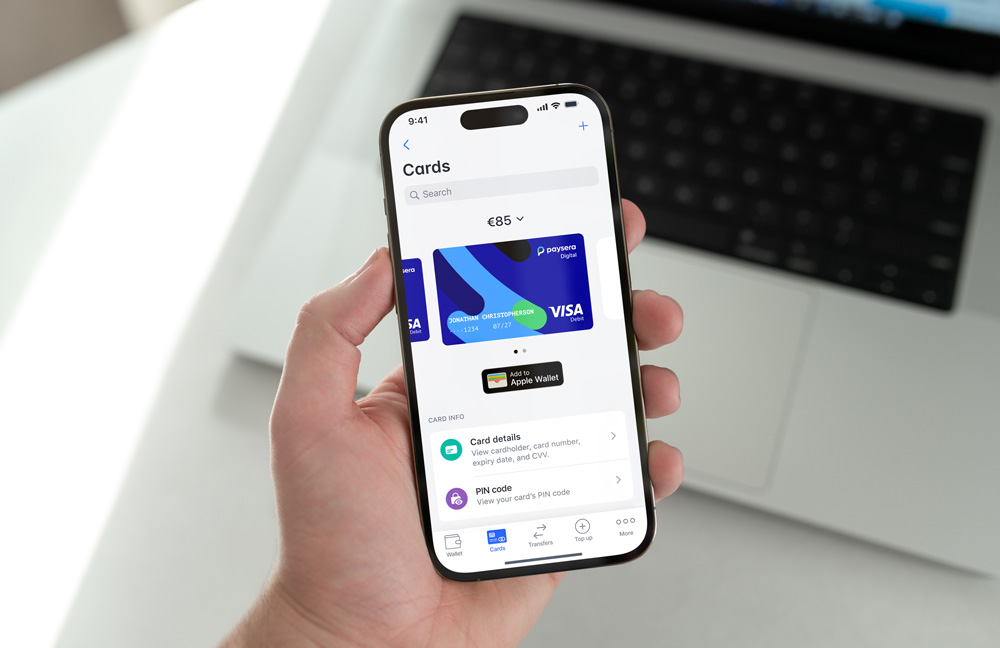
Adapting to Digital Payments Today, consumers predominantly use phones or smartwatches for small daily needs: paying for coffee, public transport, or groceries. The digital format has also become the standard for travel, allowing users to avoid currency exchange offices and manage funds more securely while abroad. This shift in habits suggests that carrying a physical card in a wallet is no longer a necessity, but a matter of choice.
Meanwhile, the rising number of digital card orders highlights consumers' flexible adaptation to evolving payment methods. While some clients still inquire about traditional plastic, the ability to start using the service instantly is a major advantage. A digital card is activated on a mobile device immediately, making the payment process independent of card production timelines or logistics chains.
Strategic Focus on Service Mobility Justina Šidlauskienė, CEO of Paysera, states that the market's reaction confirms that this format meets modern consumer expectations: "We see that the digital card is evolving from an additional tool into the primary means of payment, which is why we are focusing our resources on the development of the mobile app ecosystem. Our goal is to create an environment where the user can access all financial services instantly, without being dependent on physical infrastructure, production times, or logistics," says J. Šidlauskienė.
Security and Sustainability Aspects The decision to focus on digital solutions is based not only on accessibility but also on security and sustainability. Card data is managed within the secure environment of the app, and transactions are confirmed using the device’s biometric data, minimizing the risk of physical loss. Furthermore, by phasing out plastic production and card shipping, the company directly reduces its environmental impact.